
Showing posts with label Innovations. Show all posts

Inkless Photo Printing Made Easy by Zink

Are you tired of buying packs of inkjet cartridges? Let me tell you that salvation is on its way with ZINK, a better way to print photos instantly. As mobile phones are no longer phones, and have officially moved to being "devices", it'd be so easy if we could read news and get direction on our phones, then print it out without needing to stop at a Kinkos! Well, at least we have something close, as far as pictures are concerned - welcome to the world of Zink, a.k.a, "Zero Ink", or inkless printing!

Zink, based in Massachusets USA, is a new startup which is a spinoff of Polaroid. It uses its patented process where all you need to print your photos or documents is to buy Zink special paper, which is embedded with three layers of dye crystals-yellow, magenta and cyan- which are designed to melt at different temperatures. The crystals are colorless before printing, so ZINK Paper looks like regular white photo paper. Heat from a ZINK-enabled device activates the crystals, forming all the colors of the rainbow. No inkjet cartridges, no printer toners, no bulky printers!! With the unique technology, Zink can make printers which are so small they can be easily integrated into cell phones, digicams, laptops, TV's, digital photo frames and similar household devices.

Using traditional scanners or photo printers are now a thing of the past. Zink's technology essentially eliminates the need for using traditional printers for low-res images. With zero-ink concept embedded into digital cameras, you can easily print high-quality photos to share with friends and family. And if digicams are just not your style, you could still buy the Zink papers and use them with any other zink-enabled device.

The special zero-ink supported paper will be sold by Zink, priced at roughly 20 cents for a 2"x3" print. Just insert the paper into your printer device, and print your Polaroid-quality photos - simple and beautiful, at the click of a button. Till now, I spent a chunk of money on inkjet cartridges to print photos used on holiday greeting cards, but now, I think I'm ready to switch to Zink!

Inkless printing is no longer a dream, thanks to ZINK and its technology. Watch a demo video or find more specific details on their website.


Read more!

World's Smallest Single-Person Helicopter

Ok, so there's no doubt in my mind that most of you must have dreamt about owning a private jet sometime in your life! Whether you need a quick spin in the air, wish to take a surprise trip to Puerto Rico or the Carribean, or just propose to your girlfriend "in air", owning a private jet or helicopter has been an expensive dream for quite a lot of us. But looks like technology and luck is on our side! With this smallest private helicopter that you can actually buy, here's your chance to turn your fantasies into realities!

Leonardo da Vinci, the famous painter, was also a great & controversial scientist, whose thoughts and ideas were way ahead of his time, and hence could not be materialized. But his famous notebook drawings from 1493 show an "ornithopter" design with a screw-like rotor, which was actually similar to a helicopter that could actually fly! inspired by Da Vinci's design, Yanagisawa's GEN H-4 was created. It has no tail, and instead works on twin counter-rotating propellers that cancel out the torque that requires single-rotor helicopters to have a perpendicular tail rotor, and can fly at a maximum speed of 50 kilometres (31 miles) per hour.

The GEN H-4 from Gene corporation comes with a seat and landing gear so all you have to do is strap on and you are ready to go. The rotors have a length of only 4 meters (118 inches) so they don't cause any parking problems. It is powered by 4 lightweight 125 cc 2 cylinder engines which use standard gasoline. The GEN H-4 can fly to a maximum altitude of 1000 meters at a top speed of 90 km/hr (59 mph) for upto 30 minutes. And the best part, you dont require a license to fly the GEN H-4 in Japan and the inventors claim it is easy as riding a bicycle and with just 2 hours of practice you can master it. I wish they would get the "no-license" rule in US too!

Yanagisawa(the inventor)runs a company in Matsumoto, north of Tokyo, where he designed and built this first smallest single-person helicopter that weighs 75 kilos(165 lbs). The 75-year old inventor will make a demonstration flight in the city of Vinci, near Florence, on May 25; and only after a trial run in the dessert, he has already sold five units in Japan and two to US customers. The cost for one is a reasonable $58,250; with an average flight speed of 31 mph, its still better than most cars! I'd love to fly everyday to work, but that would cause even more problems with flight and aviation department, not to mention the tonnes of helipads that companies would need to build!! Well, maybe our grand-kids would see that aspect of the world, but for now, I'm just happy with this single-person private helicopter that can fly me to places catering to my whims!

AceCraft is the licensed distributor in the US for this single-person helicopter and their website can answer most of questions and queries, with loads of information and photos.


Read more!

PAL-V - The Super Cool Flying Car

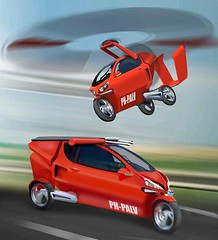
Flying-Car-PAL-VOk, so we all know that a day will come when there will be flying cars in the city, and robots will replace humans for most of the work! And though most of us have just seen flying cars in a movie or a video-game, one Dutchman called Jahn Bakker has put his idea into implementation so you can actually buy a PAL-V Flying Car in 2012! Isn't it cool? wow, future doesn't seem to be as far as I thought! If flying cars become a reality, space travel is not too far ahead, I'd say! So all you enthusaistic budding-pilots out there, get ready for some "serious flying"!!
So what exactly is this Flying car that we are talking about? Well, the PAL-V Flying Car, designed by a Dutch engineer named John Bakker, is actually a three-wheeled car (or to some a motorcycle) on the road; however open up its roof and back to find a foldable rotor, propeller and tail section, and you convert it into a helicopter, ready to take off in a few seconds! PAL-V ONE, is the first Personal Air and Land Vehicle (PAL-V) available for anyone's use. It combines the recent "tilting car" technology of the Carver with the safest and easiest principle of flying, the gyrocopter. It has the exclusive rights to all the basic patents covering this magnificent concept.

After 6 years of concept work, PAL-V Europe BV has now entered the next phase. It is starting to build the first commercial prototype, ready to start production and carry out the market launch of the PAL-V ONE by 2012. Since 2004/2005 new European and American regulations allow people to fly the PAL-V with a simple sports aviation license. It takes between 15-25 hours getting a license for flying while driving can be done with a regular car driving license.

Airborne, the PAL-V flies under the 4,000 feet (1,500 m) floor of commercial air space, and can hold one person only. it is highly fuel-efficient and is powered by an environmentally certified car engine. It runs on petrol/gas like a conventional car and can reach speeds of up to 200 km/h both on land and in the air. At less than 70 decibels, it is much quieter than helicopters due to the slower rotating of the main rotor.

In the US the "High-way In The Sky" HITS-program is being developed to allow extensive personal air traffic. In Europe initiatives have been initiated to develop a copy of this system called "Digital freeways", which provide a safe corridor using GPS technology to aid air-regulation and avoid collisions for low flying vehicles.

And now for the most important question: How much does this cost?? Well, there's no price-tag on the PAL-V yet; Commercial prices will be established depending on volume and competition a year before market launch in 2010. but I bet with the growing trends of owning private jets, this coolest innovation will need to be competitive to make it accessible to local public. Check out some more details about safety and working principles on the PAL-V FAQ's page.

I don't know how this will affect the already struggling air-traffic control, but I know there would be many amongst us who would be thrilled to own a flying car, including me! how soon it becomes a reality, only time will tell!


Read more!

Honlai MP100 - Palm-sized Mini Projector

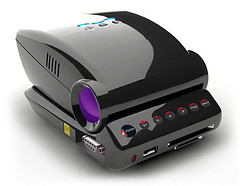
Honlai MP100 mini-projectorAs technology advances, we are moving towards everything "nano", so from a Nano-Car, to a Nano-Projector, we've achieved quite a lot of progress! The latest mini-gadget added to the list of impressive innovations is the Honlai MP100 - the tiny palm-sized mini-LED projector which looks like a bundle of power packaged in a small frame! It looks really sleek and impressive, and is ergonomically designed to look like a mouse, and deftly fit in your palm!

Honlai Technology's latest innovation is the mini projector called MP100, which uses the LCOS micro projection technology capable of throwing an 640x480 image onto a nearby wall or screen, sized between 5" to 37". With the quoted 10-15 lumen specification and a contrast ratio of 200:1, and a 5-watt LED, its not something fancy for a board meeting, and cannot compare to the regular proejctors. But it sure looks like the perfect projector to use if you are the one who does impromptu PowerPoint presentations wherever you go!

The Honlai MP100 is not something that instantly clicks with your geek side, especially when you evaluate it for its use. But I was impressed, because I ahve found myself in several situations where I had something on my laptop which could validate a point or clarify an issue in a meeting, and rather than sharing m,y deskptop with everyone, or making them gather around me while I explain stuff, it would be so cool if I just had the MP100 to project my screen on a wall nearby! Most conference rooms are small, and a 37" proejcted image is more than enough to convey an idea by means of a picture! Plus, this innovation is mainly designed for unplanned and in-promptu uses; if you are makign a business trip for a presentation, of course you are going to use the bigger projectors! But for quick demonstrations, this mini-LED projector works perfectly!

I think I like the MP100 for its sleep design, cool concept, and the easy to carry it in your pocket. If people can think about having a projector in an ink-pen, why not the classy Honlai MP100?? I think as people warm up to the concept of mini-projectors, they can re-design this for better usability and higer capability. No price and release date on this yet, but I'll be sure to update the post when I know about it!


Read more!

Google Targets VisualRank for Enhanced Image Search

The world of web search relies a lot of Google's PageRank technology, and until semantic web comes into existence, feeble efforts by Ask may not be able to compete with the PR concept. But the one area where google lacked its credibility was in image search. Using the title or alternate-text associated with images is not exactly the most efficient way to conduct image search. However, Google researchers say they have a software technology intended to do for digital images on the Web what the company’s original PageRank software did for searches of Web pages, which may be the first prototype of this kind that has VisualRank for Images.

As stated in a recent article in NY Times, two Google scientists presented a paper describing what the researchers call VisualRank, an algorithm for blending image-recognition software methods with techniques for weighting and ranking images that look most similar. The prototype solution was demonstrated at the International World Wide Web Conference in Beijing.

Although image search has become popular on commercial search engines, results are usually generated by using text associated with images rather than the image itself. Image analysis remains a largely unsolved problem in computer science, and though automatic face detection has seen some light of the day, finding other objects such as mountains, landscape or small objects is still a challenge.

"We wanted to incorporate all of the stuff that is happening in computer vision and put it in a Web framework," said Shumeet Baluja, a senior staff researcher at Google, who made the presentation with Yushi Jing, another Google researcher. The research paper, "PageRank for Product Image Search", is focused on a subset of the images that the giant search engine has cataloged because of the tremendous computing costs required to analyze and compare digital images. The company said that in its research it had concentrated on the 2000 most popular product queries on Google’s product search, words such as iPod, Xbox and Zune. It then sorted the top 10 images both from its ranking system and the standard Google Image Search results. With a team of 150 Google employees, it created a scoring system for image "relevance". The retrieval returned 83 percent less irrelevant images than those based on text.

Google is not the first into the visual product search category. Like.com, started in 2006, offers a service that refers users to shopping sites, makes it possible for a Web shopper to select a particular visual attribute (ability to match shapes and objects rather than text), such as a certain style of brown shoes or a style of buckle, and then be presented with similar products available from competing Web merchants.

We all know that an enhanced image search is definitely required, and the current search technique based on text is not 100% accurate. But with the imperfect image-recognition techniques currently available, does Google's claim see too tall?? And will this be a scalable solution, considering the large amount of images foound on the web? VisualRank sure seems like adding value to the quality of image search, but seeing this implemented is something I'd like. However, i hope Google would focus more on semantic web first so web search can get more meaningful!


Read more!

Photoreactive Sun Canopy - A Fusion of Architecture and Technology

Summer has officially kicked in, and people are out buying shades and canopies to beta the heat. But no one would have dreamed of a better canopy than the designers at Milan's 2008 Furniture fair! Made out of funky material that creates illusions of colors on reflecting sunlight, this photoreactive sun canopy is more like a piece of architecture than just a refuge from the sun! Termed as Project OR, this intriguing piece of art wowed the audience at Milan.

Visitors to this year’s Salone del Mobile (Milan Furniture Fair 2008)were in for a treat when they walked into a quaint Italian courtyard on Milan’s Via Borgospesso to witness Christoph Klemmt’s stunning vortex-shaped OR installation. Composed out of polygonal, polypropylene, photoreactive segments which respond to ultra-violet light, OR’s captivating powers lie in its capacity to adapt its appearance to changes in weather and daylight. Its "skin" emits flourishing hues of blue and green when exposed to sunlight and maintains a subtle translucent white when the installation is overcome by shade. Best of all, OR’s effects are not limited to daytime - at night, it generates ample atmosphere by becoming a "psychedelic chandelier" flooding its surrounding areas with a dramatic disco of lights.

OR is the first time that photoreactive technology has been used on an architectural scale. The ecological structure is a step in exploring the possibilities of photoreactive materials in the fields of furniture and design. The beauty of OR is its constant interaction with the elements. Each moment of the day is unique. The installation was a collaborative effort by architect Klemmt and fellow London-based designers Ran Ankori, Francesco Brenta, Maya Carni, Laura Micalizzi and Elisa Oddone. For more details and a photo gallery, visit Project OR.


Read more!

A Bike That Runs on Air?? - Now That's Eco-Friendly!!

Gas Prices are sky-rocketing, and driving a car to work everyday is becoming even more taxing that taking a bus and a train, even with an hour-long commute! The tech world keeps talking about "alternatives to fuel" and "green vehicles", but these are not as easily available as we'd like to see. But what if I told you that you could design your own "air-powered bike" without much fuss and money? Before you start thinking I am a jester making funny jokes, let me tell you that this guy you see in the picture has already made one for himself!

After the air-powered watch, let me tell you about the current rocket scientist cum inventor Jem Stansfield who has successfully created an air-powered moped that helps save money and energy. He took a couple of air canisters normally used by firefighters for their breathing apparatuses, and lashed them onto a Puch moped. He claims that this is the world’s first motorcycle powered by fresh air, which eliminates pollution to a great extent.

The two compressed air cylinders drive a pair of rotary air engines that propel the bike to a top speed of 18mph, but it’ll only go about 7 miles until more air is needed. But unlike electric scooters, it takes just seconds to recharge from larger air tanks filled by a diving compressor; just a quick stop at a fill-up shop and you are good to go!. Surely not a bad idea if you live close to work, or use this for shorter distances.

Jem Stansfield built the scooter for a National Geographic channel documentary called Planet Mechanics. He is a true innovator in creating one of the most environmentally sound vehicles today. You can see him test ride it in Bristol when the programme is aired on June 3 at 6pm. No matter how crude it looks, I think this may be a step in the right direction for a greener Earth. Motor companies could actually perfect this technology to produce more air-powered cleaner vehicles, right?! Also check out this innovative hybrid-electric car that is soon to hit california streets.


Read more!

The Much-Awaited Hybrid Electric Car From Aptera Debuts in California

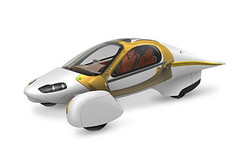
We've been hearing a lot about Hybrid and All-Electric cars with high mileage promises for quite some time now. But looks like finally the long wait is over as one of them succeeds to move from R&D to actual production! Aptera has officially unveiled two vehicles (which look more like mini-planes to me!) that could change the future of automotive design, and is ready to find its place on California streets by end of 2008! Modestly-priced at 26,900(all-electric) and 29,900(plug-in-hybrid), both the Aptera's Typ-1 models are sure to create a buzz, especially as they boast a really attractive mileage figure of 300 miles per charge!!

"Aptera" is a greek word for "wingless flight". And just as the name and shape suggests, this car looks more like an airplane rather than a car. With 3-wheels, a perfectly aero-dynamic design, and doors that flip open upwards, the Aptera looks like something out of a stylish James Bond movie! Through extensive fluid dynamics modeling and materials engineering, the Aptera team has created the most efficient, lowest-drag shape that can surround two occupants side-by-side, and has safety as a priority in the design.

Some Features
The car has three wheels, making it eligible for most carpool lanes(HOV), even with only one person in the vehicle. It also has "two plus one" seating offering ample room for driver and passenger while an infant seat (for newborns to age three) can be located in the middle behind them. Storage room is also generous with enough space to fit 15 bags of groceries, two full-size golf club bags or even a couple of seven foot surf boards with the infant seat removed. Solar cells embedded under the roof operate an always-on climate control system, ensuring the interior never gets too hot or too cold. The dashboard display and info-entertainment system is controlled by an in-vehicle computer, which also controls the "Eyes Forward" vision system which gives the driver complete situational awareness without taking their eyes off of the road. And yes, it also comes with an Advanced drive computer with GPS navigation, CD/MP3/DVD player and XM satellite radio!!

Is this Car Safe?
Unlike many 3-wheel vehicle designs that were abandoned in the 80's due to their instability the Aptera has two wheels in the front and a single rear wheel eliminating any tendency to roll-over. The Aptera also features traction control for more stability control.

Performance Specs
So how fast witll this mini-plane travel on the road, you'd think! Well, the Aptera team and the conducted test trials claim that top speed for the production model will exceed 85 mph, going from 0-60 in under 10 seconds.

A Few Concerns
I love the concept, and the design meets the requirements for an efficient Hybrid Car. But they say the top speed is around 85mph, so can you imagine trying to drive this car in the HOV lane at around 60-70mph?? If you do, be prepared for some swearing and honking!:) Also, despite their safety commitments, I find it a bit hard to imagine that such a design could be stable and safe, and car doesn't really start "flying" in the high-california-winds!! So take a moment and check out the detailed Specs and FAQs on their website.

Aptera is initially going to be launched exclusively in California only, but slowly the team would expand to other US, Asian and European markets. Jump over to their website and take a look at more pictures and cool videos. If you like what you see, they are accepting fully refundable $500 deposits from California residents.


Read more!

Forgot where you Left Your Car Keys? - Smart Glasses Can Help!

How many times have you been detained for a meeting because you are in a hurry to leave but cannot find your wallet and your keys?? Or remember the times when everyone's settled in the car and you suddenly figure out that you've forgotten your keys inside and can't remember where you left them? yeah, sounds familiar, right!! Misplacing something is bad, and forgetting where you kept it last is even worse! Luckily for people like these suffering from "short-term amnesia", frustrating incidents like these may finally have found a cure. Japanese scientists have invented a pair of intelligent glasses, or rather "Smart Goggles" that remembers where people last saw their keys, handbag, iPod or mobile phone.

The smart spectacles - which come with a built in camera, display screen and computer brain - can even identify unfamiliar plants or faces. In fact, the only thing it can't help you find are your glasses(ironic, huh! well, at least you need to keep track of just one thing:)) These Smart Goggles are the brainchild of Prof Kuniyoshi at the University of Tokyo. He believes they could revolutionise the lives of people who suffer from regular "senior moments", as well as those suffering from serious memory problems caused by dementia.

The Smart Goggles contain a compact video camera which films everything the wearer looks at - and a viewfinder which fits snugly in front of the right lens. The glasses are connected to a small, but smart computer processor worn on the back which can learn to recognise shapes extremely quickly. To use these glasses, the wearer first wanders around a house or workplace for an hour or so, looking at the objects he or she may later want to find in a hurry. Each time the camera focuses on a object, the wearer should speak out the object's name aloud, which is then recorded and stored into the memory. Once the names have been programmed in, the glasses will try to find the right name for any object they come across. The names appear in small type on the viewfinder. The glasses search its video memory and show its last known location on the display. And if they cannot recognise an object they make a guess and adapt from their mistakes!!

In a demonstration at the university last week, the team were able to programme in the names and identity of 60 everyday objects, including a compact disc, a hammer, a potted begonia and a mobile phone. Prof Kuniyoshi believes the invention could become a useful memory aid for the elderly, as well as for people suffering from Alzheimer's disease and other forms of dementia. The high speed, image recognition technology could also help develop robots or other educational purposes. More sophisticated versions could also help people who are bad at remembering names get through awkward social situations (read "my husband" here!).

But as fancy as it sounds, its a dumb programmable invention, and certainly has its flaws.( like hide or move an object from its original place and your smart glasses won't be so smart anymore) And the prototype version is still too bulky and obtrusive to use, as you can see from the picture above. However, they are trying to shrink the camera and viewfinder down to a more sensible and fashionable size within a few years. For now, its a start, and the concept can be really useful, so we wish them all the luck! But remember to not forget your glasses, or you are back to square one:)


Read more!

"sQuba" -World's First Zero-Emission Underwater Sports Car

The Swiss have been known for their outrageous yet creative innovations, and albeit pricey, they surely attract buzz from those who seek to own something fancy and exclusive. From watches to cars, it has been an interesting journey, and their latest offering goes well beyond one's imagination as they develop a Concept Car called "sQuba" which can instantly grant you the "Bond Appeal"!! Remember James Bond’s amphibious car, Lotus Esprit from "The Spy Who Loved Me", the all-in-one fictional vehicle that looked like a car on land, but when chased by bad guys in a helicopter, plunged into the water and became an airtight submarine — complete with "torpedoes" and "depth charges"!! Looks like the Swiss are about to realize your fantasy with their latest design!

The concept car, named as "sQuba", was developed by Swiss designer Rinspeed Inc. and is already making a splash at the Geneva Auto Show that's going on right now. The company's 52-year old CEO Frank Rinderknecht, a self-professed Bond fan, had been waiting 30 years to recreate the car he saw Roger Moore use to drive off a dock, and has finally achived his dream! Just to let you know, this innovative company has presented transparent, flying and voice-activated cars too in previous Auto Shows!

Some of sQuba's cool features include the ability to plow through the water at a depth of 30 feet (with electrical motors to turn the underwater screw). The car has an open top, making that a convertible sports car! The open car helps if passengers need to get out to explore the aquatic wealth around, or to make a quick emergency exit! I would have felt more protected with a covered shelter when I'm in the midst of sharks and whales though, but the open top was necessary to counteract the unwanted buoyancy within water.

To enable normal breathing, the car is equipped with an integrated tank of compressed air similar to what is used in scuba diving. And if you are thinking whether this fancy underwater car can be used on land too or not - then let me tell you that the sQuba’s top speed on land is about 77 mph, but it slows down to 3 mph on the surface of the water, and 1.8 mph underwater.

So how does this underwater car work?? He removed the combustion engine from a sports car and replaced it with several electrical motors. Three are located in the rear, and one provides propulsion on land while the other two drive the screw for underwater driving. When you take the car into the water, it floats. But the moment you open the door a little to let the water in, it starts going "underwater", like a submarine! Without occupants the "sQuba" surfaces automatically. It is even capable of autonomous driving on land thanks to a sophisticated laser sensor system from the Hamburg company Ibeo - without any help from the driver!! You can get more first-hand details here.

This highly innovative concept car runs on rechargeable Lithium-Ion batteries, and is also a totally "zero-emission" vehicle! And it's not just a car, its a sports-car convertible, and can strongly be categorised as a "Green Underwater Car". Even the Motorex lubricants used in the ‘sQuba” are biodegradable!! Can you beleive that! Hats off to the designers for having thought about everything. It's truly an innovation that not only realizes a fantasy, but actually stands out in terms of creativity, planning and achievement!


Read more!

Nestle's Research Shows that Machines Can now Smell and Analyze Your Espresso!

Anyone who's addicted to coffee and its flavor can vouch for the fact that your daily cuppa-joe needs to be brewed perfectly, if possible. Simple events like change of baristas, change of venue or change in ingredients can kill the taste of your coffee. That's why most of us stick to the same cafe for our drinks! But here's some sizzling news - Robots or Machines that can smell coffee are in the making, research by the food giant Nestlé suggests. A team led by Christian Lindinger at the company's research centre at Lausanne, Switzerland, has developed a machine that can correctly predict the judgements of trained human coffee tasters - and may eventually replace them.

Designing a machine that can identify the aroma of complex coffee flavors and describe it has proved challenging for flavour scientists. Seems like they have finally achieved it.
To establish a connection between the verbal description given by humans and the chemical analysis performed by machines, Lindinger and co-workers compiled "sensory profiles" for 11 different espresso coffees by asking tasters to score each one in 10 different taste categories, such as bitter, woody, or acid. They then fed the results of proton transfer reaction mass spectrometry of the gas phase above each coffee into a computer program that was able to 'learn' from experience and matched up the mass spectrometry results to the human sensory profiles.

Finally, to test the program, the researchers used it to predict the sensory profiles for eight new types of espresso. The predicted profiles closely matched the evaluations of human tasters, even though the machines were not able to taste the coffee, only analyze its smell! As the machine only needs two minutes to take each sniff, the Nestlé researchers say their method would be suitable for high-throughput analysis of coffee quality. From there, a machine that can brew a cup of coffee to suit every customer's unique taste profile is surely just a small step away.

Nestle researchers have stated that the machine has "nearly" the taste accuracy of a panel of trained espresso tasters, who, if this machine is any indication, may soon have to switch professions! Will Nestle market this machine as a product? While there's apparently still quite a bit of work to be done on the coffee tasting machine, Nestle eventually sees it being used as a quality control device for the entire coffee industry. Right now, it has no plans to sell the concept as a "product".


Read more!

The Wave-Powered Suntory Mermaid Ship - All Set For its First Voyage

Most of us are aware of how many times oil spills in large ships cause irreversible damage to the ocean life and pollute and destroy the marine resources. Since quite some time now, people have been exploring alternative sources of energy to make eco-friendly ships. And looks like one of them has actually succeeded. After the air-powered car, here comes a wave-powered boat! The three-ton catamaran Suntory Mermaid-II is all set for its first voyage from Hawaii to Japan in May 2008.

The primary objective in designing this ship is to make alternative energy work economically and practically. And here's a brief explanation of how that is achieved. As the above picture shows, a pair of side-by-side fins in the ship's bow absorb wave energy and express it in a dolphin-like "kick". Since the fins react to the waves, the ship as a whole remains remarkably steady. Sort of like driving over a bumpy road - your car's tires jounce and bounce yet the passenger cabin does not.

The Suntory Mermaid II is the latest of a number of Japanese eco-powered, recycled aluminum construction watercraft sponsored by Asahi News, supported by Suntory Co. and built by the Tsuneishi Shipbuilding Company. Kenichi Horie, veteran of a number of eco-voyages over the past decade and a half will captain and crew the vessel on its May 2008 inaugural 4350 miles long voyage from Honolulu, Hawaii to Kii Suido, Japan on wave power alone.

Unlike pedal-power, the Mermaid II's innovative wave propulsion system shows the way for large cargo shops to go green, but that comes with the associated disadvantge of low-speed. The Mermaid II has a maximum speed of just five knots and will take two to three months to make the trip from Hawaii to Japan, compared to a diesel-powered craft's single month journey. But that shouldn't be a problem for large cargo ships.

The recycled-aluminum hulled catamaran is equipped with 8 solar panels producing 560 watts power to run electrical lighting and Horie's computer & phone. The ship does have an outboard motor engine and a sail, but they're only there for use in case of emergency. The massive ship sounds like the perfect design for its intended use. At least we'll not be responsible for large-scale depletion of non-renewable marine resources!


Read more!

Emotiv-EPOC: A Headset that Controls your Mind!

Are you a video-game freak, just like millions of others?? Do you like challenging yourself with hand-held video games and burn out your fingers punching the arrow keys on your tiny keyboard? well, here's presenting a mind-controlling headset that can actually "understand and translate" your thoughts into actions so you only use the grey cells, and leave the rest to the headset! If you think I'm just babbling and not making any sense, read on and you'll discover that I'm talking about something that indeed revolutionizes the mind and thought process.

Emotive Systems Inc. recently demonstrated a new gadget which looks like a headset, or is actually a headset, but does much more than that. The headset's sensors are designed to detect conscious thoughts and expressions as well as "non-conscious emotions" by reading electrical signals around the brain. The company, which unveiled a prototype last year, says the headset can detect emotions such as anger, excitement and tension, as well as facial expressions and cognitive actions like pushing and pulling objects. Some of the smart interpretations of this gadget include acknowledging meditation, tension and frustration; facial expressions such as smile, laugh, wink, crossed eyes, shock (eyebrows raised), anger (eyebrows furrowed), horizontal eye movement, smirk and grimace (clenched teeth); and cognitive actions such as push, pull, lift, drop and rotate (on six different axis) as well as a completely new category of action based on visualization, the first of which is the ability to make objects disappear.

The headset will be sold with a game developed by Emotiv, but it can also be made to work with existing PC games, the company said. Users will also be able to access an online portal to play more games, chat or upload their own content such as music or photos.

Emotiv plans to work with IBM Corporation to explore applications beyond video gaming. The "brain computer interface" technology could transform not only gaming, but how humans and computers interact, said Paul Ledak, vice president of IBM's Digital Convergence business. Emotiv Systems Inc. plans to start selling the $299 EPOC neuroheadset sometime in the latter half of 2008. Check out a first-hand review from someone who experienced it at the Conference. The Emotiv EPOC Headset looks cool and while I think that the technology is fascinating, even stunning at times, it's hard to tell at this point whether it has real world practical video game applications. Plus, mind control is a very sensitive issue, and if it can be used for simple motives like playing video games, when misused, it can also have dangerous implications. Reserve one of these headsets today and find out for yourself!


Read more!

Solar Laptop Charger Bag - An Efficient Way to Charge your Laptops and Electronic Devices

The Go-Green culture is picking up with the rising awareness of depleting natural resources and the growing Green House effects. Turning towards renewable and natural sources of energy has become the need of the hour. Voltaic Systems recently announced a Solar Laptop Bag at the CES 2008(Consumer Electronics Show) which could be a real blessing as Laptops remain to be the most power-consuming devices in this world! It uses high efficiency solar cells to generate maximum power in the limited space available, and it can also charge cell phones and most other hand held electronics.

The Voltaic Generator is the first solar bag powerful enough to charge a laptop. It is so designed that the solar panel generates up to 14.7 watts of energy from a day of direct sunlight, which is sufficient to fully charge a laptop. The included battery pack efficiently stores the equivalent of a typical laptop charge and automatically delivers the required output voltages to the device. Common adaptors are included for easy connection to laptops, phones and other handheld electronic devices also via USB or car-chargers.

Other features of the Solar Laptop Bag include capacity to hold up to a 17" laptop inside a protective case. The bag fabric is made from recycled PET (soda bottles), which is tough, water resistant and light-weight. Experts believe that a 14-watt panel will be good enough for charging a laptop when it is not in use. But running it directly from the sun would require larger, and more expensive panels.

However, it looks like Voltaic Systems has done a good job of providing an alternative solution to meet the need, and it definitely ties well with the Green Products Theme. They plan to sell it by the spring of 2008, and the expected starting price would be $599.


Read more!

The Lazy Teapot - A blessing for the Disabled and Elderly

It's true that the entire gadget craze is aimed at making us lazy, but it's better to go with the pretense that they make life more simple! At least my hubby would agree with this theory, and so would many others in this world. You have to admit that some of these design innovations are not the same for all. What might be a lame device for someone, could actually be a blessing for someone else. And this Lazy Teapot seems to fit the bill! It's a classic teapot that relieves you of that cumbersome task of actually picking up a teapot and pouring its contents into a cup:) And there's a little more!

Designed by Lotte Alpert, this concept is both stylish, elegant, and could actually come in handy. Most of the cool gadgets simply sell on a style appeal, and the few that work towards making lives simpler, are an instant hit! This elegant porcelain teapot, available in classic white, comes with a matching silver docking base, which allows you to pour your cofee or tea without having to lift it up. The pout is long and ensures that you don't spill your hot drink and create a mess while serving your guests.

Furthermore the holding device is able to boil up the liquid in the teapot and to keep it warm precisely on different temperatures. The measured temperatures are read at the diodes in the region of the operational controls and compared with the temperature that was manually chosen. So now you don't even have to worry about reheating your beverage! It is great for clumsy people as well as for handicapped, disabled or elderly people who find it hard to lift or balance the pot. Plus, the Lazy-Teapot looks really chic and is sure to impress your guests too! And if it makes you a little bit lazier, who cares? After all, that's the mantra the entire "La-Z-Boy" company runs on, right!!


Read more!

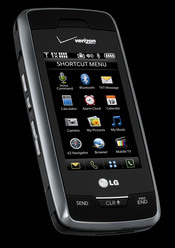
Google's Android-based Prototypes Unveiled at Mobile Expo

A lot of hype and hooplah was created when Google announced that it would venture into the wireless world. People had conjured up images of the illusionary G-phone and were waiting with abated breath for its arrival. Sadly, that never happened. But investors and techies did find relief in the fact that Google would still develop a new mobile operating system called "Android", which would still change the face of a lot of applications, and the wait and excitement revved up again. Finally Google delivers on its plans as the first prototype of phones running Android make a public appearance!

Confirming earlier expectations, Texas Instruments and a handful of other chipset makers demonstrated a working example of Google's Android (mobile operating system) on functional hardware. The prototype device is said to prove the speed of the Linux-based software on even obsolete hardware. The version of the software on display also confirms several interface elements that bear a resemblance to Apple software. While the entire OS is considered open and modifiable down to key interface features, the default Android appearance includes a Mac OS X Dock-like application launcher as well as bubble pop-up notices that recall the iPhone. Google's media player software, camera functions and Google Maps are also available on the demonstrator model (img courtesy electronista)

Google plans to deploy the open source mobile phone system commercially in phones and services in the second half of 2008. Newsvine has it that HTC, LG, Motorola, and Samsung plan to build devices based on Android, so you might see them emerging into the markets by the later half of this year. Samsung suggested they would roll these out by early 2009.

Google hopes Android will create the same sort of applications explosion for mobile as we’ve seen on the Web. "Basically it means you no longer have to shoehorn applications in. Anything that can work in a Web environment will work well here, and also on PC or Mac – games, multiplayer, video and audio, social networking" said Google Chairman and CEO Eric Schmidt. With Apple's iPhone, Garmin's Nuvifone, and now Android-based phone, the wireless cell-phone world is surely seeing a lot of changes. What clicks and what fails is for you and me to decide, right?!


Read more!

Spruce Up your Kitchen with Innovative Snap Cups and Tableware

If you are a fun-loving person who loves to cook and entertain, Angela Schwab has something for you that is sure to blow you away! The colorful, vibrant and retro collection of cups and tableware from a Denver-based ceramic production studio not only adds a splash of color to your table, but also an intriguing sculptural element. These are no ordinary cups, in fact they are an innovative design invention that is a perfect balance of features, functionality and creativity. So if you are ready to add some spice to your kitchen, check these out! I'm sure you'll be attracted to these beautiful creations.

Featured above (the pic on the right) are Stalactite cups, which is basically a set of chain-link magnetic cups. Perfectly sized for a couple shots of espresso, champagne, or some tea, these small ceramic cups come with magnets embedded in either side, so you can hang them off your refrigerator, or link them together to add a fun and interesting arrangement to your kitchen. The image above shows how they are hanging down from an iron rod in the kitchen!!


Angela Schwab, residing in Denver, specializes in Invention of new forms through Alteration of existing objects in order to enhance the way people can use and interact with everyday functional products, and proudly presents a line of interesting products through IN/ALT, her production house. Featured above is the classic "Tableware", which utilizes neodymium magnets embedded in the ceramic pieces and the table to store your dinnerware under your table. Imagine your guest's surprise when you pull out a whole place setting (plus a candle) like magic from beneath the table!! Cool, huh!??

Or check out these brilliant "Snap Cups", which have snaps on the sides or bottoms and comes with a cork-cushioned handle to ensure a snug fit, while the other kind snaps onto a glass stem. There's plenty of opportunity to mix and match, so you can create the artistic Cup-Candles (shown below) or the very cute Magnetically-linked cups for you and your valentine to share your love and more!


I love all of these innovative ideas! They are beautifully designed, and have a lot of functional value. Easy to store, they actually are space-savers too! And I love the "hide-it-under-the-table" idea! Neither variety is dishwasher or microwave safe, so they need to be washed by hand. But all of them have been tested to work with any kind of beverages and deemed to be safe to use. For more designs and order information, visit their website!


Read more!

FuelVapor Introduces a High-Mileage Low-Emission Next-Generation Sports Car

Global Warming has taken its toll everywhere, and the "Go Green" technology seems to be the mantra of the hour. Everyone is trying their best to make the environment cleaner in any possible way, and FuelVapor has come out with an extra-ordinary Green Sports Car that looks like something out of this planet, or perhaps a james Bond Movie!! If you thought Hybrids are the best you can get to fight the escalating fuel prices, think again! What if I told you there's a fancy-looking sports car that guarantees a high-mileage, keeps the air cleaner, and can go from 0 to 60mph in 5 seconds??

FuelVapor Technologies has developed a new technology that has produced one of the highest mileage cars in North America. Created by inventor George Parker, this new concept car - the “alé” (alay) uses regular gasoline and a new “fuel vapor technology” to acheive what it advertises.

This car is really out-of-this-world, as it has only 3 wheels!! This design enables the car to perform at a superb level, as well as aid in improving fuel efficiency and aerodynamics. The car’s key innovation's are the fuel vapor system and it's light weight aerodynamic body. This fuel vapor technology (patent pending) allows the engine to run on “fuel vapors” rather than liquid fuel, which allows the “alé” to run on a ratio of over 20:1 without compromising performance. This means with a 10-gallon gas tank found on most vehicles, you can travel from Vancouver BC to San Francisco CA on one tank. Over 15 hours of driving without filling up.

The first prototype is now complete and the results are outstanding. Plans are for limited production ale's to begin fabrication in 2008. People have actually test-driven this beauty. For more details about the design, engine, features and pictures, visit their website. FuelVapor Technologies will also be competing in the "Automotive X-Prize" - a $10 million competition for the fastest 100mpg car in the world.

I'm certainly wishing them the best, for this could be an innovation we are all waiting for!!


Read more!

Tata Nano (World's Cheapest Car) - An Innovation that Fuels the Indian Dream

The US economy might not be in its best times, but the growth and revolutions in emerging markets like India are breaking all barriers! The latest to hit the ever-growing Asian and European markets is the sensational Tata Nano - the no-fuss, fuel-efficient energy car that has fueled every Indian's dream to own a car. Anywhere else, a new car may have received some acclaim for what it's worth, but in india, things are different. Advertised as "the world’s cheapest car", the Nano is a no-frills automobile designed by Tata to be affordable to millions who commute on 2-wheelers carrying a family of 4-6!! The impact is huge, and everyone is excited at the prospect of owning a car that is only 1 lakh rupees ($2500). But whether it stands the tests of time, and whether it creates more problems than solutions is yet to be seen.

Termed as a "People's Car", it is a cute (or maybe not!!), compact car designed to appeal to first-time car buyers in one of the world’s fastest growing car markets. The car is the culmination of about five years of research and input from designers across the world. But it is definitely a step ahead in innovation, right from using aerospace adhesives instead of welding, a clean and efficient fuel-burning technology to the concept, distribution strategy and marketing, and has succeeded in catching the attention of the world.

Designed to look sleek and compact, about the size of a BMW Mini Cooper, and styled to enable aerodynamics, this concept car is not for those seeking class. The four-door Nano is a little over 10 feet long and nearly 5 feet wide. It is powered by a 623cc two-cylinder engine at the back of the car. With 33 horsepower, the Nano is capable of 65 miles an hour. There's a singel wind-shield wiper, and no A/C (though a high-end version will also be out sooon) Its four small wheels are at the absolute corners of the car to improve handling. There is a small trunk, big enough for a duffel bag, but on the whole, it does give tough competition to the current favorite Maruti-800.

But a look at the side effects of this revolution is in order here. As everyone knows, India is densely-populated, and the current road conditions, narrow lanes, and lack of traffic control, and the dearth of parking structures may be on a rise if the streets get flooded with these cars!! On the other hand, neccessity is the mother of invention, so this might give rise to more infrastructure opportunities and new businesses! It will surely be a safer bet for those families of 6 who risk their lives travelling long distances on a motor-bike!!

But saying all this, whether the Tata Nano succeeds in revolutionalising the automotive industry is yet to be seen. If it delivers all that it has promised, it may surely be seen in every low-middle-class household in a short span of time. Check out more videos and pics here, and tell us what you think about this Mini Car Revolution.


Read more!

Cars that Change Colors on the press of a button!!

My old car is going busted, and it's time for us to seriously start thinking about buying a new car. So as we were browsing through some models online, we saw that the sleek-looking blacks or graphites and the metallic blues added a dent of another 1000 dollars to our pockets which are already falling apart!! And unfortunately, those are the only colors that catch your eyes, not the stark whites, right?? So I sat there wondering how much fun it would be if we could make cars that changed colors on our whim?? Pop-press a button, and my car turns grey; come sweltering summer and I'd press the button again to turn it into a soothing white...or much better, I can have a modern double-colored car with streaks - such that I've seen and dreamt about in 2 fast 2 Furious!!!

Looks like God wanted me to revel my dream, and at least be happy with the thought that something like my crazy idea could actually exist. Yup, Nissan, the renowned car-maker who's trying hard to revamp it's image and restore it's lost glory is coming out with new ideas that would appeal to the nerdy and young crowd (like me and my readers!!) They were the ones who dreamed up the concept of "self-healing paint" some two years back, which was supposedly scratch-resistant, and they are now talking about "a paramagnetic concoction", which enables motorists to change the color of their ride at the press of a button.

Is this just an idea, because we all have a lot of ideas...or is it for real?? Well, looks like it is real and the secret behind this is a special polymer containing paramagnetic iron oxide particles, which is applied to the car's exterior. Then, by applying an electric current, the spacing of small crystals within the iron oxide particles can be adjusted, therefore affecting their ability to reflect light and change color. The catch (yeah, there's always a catch!) once your engine is turned off, and there's no current running, the charge is lost and the car turns to a default color (maybe white, maybe something else, it's for them to decide)

If all goes well, Nissan expects to roll out these vehicles by early 2010. Though the concept is fascinating, and truly an innovation, I wonder what would happen when all parked/turned off Nissan cars would turn to the same default color...how do you identify your car? especially for people like my husband who never bother to memorize the number plate?? well, it sure will be more work for cops chasing people, as the latter could keep flipping their car colors at the whim of a button and confuse the cops!!! sounds funny, huh?!! The case of the color-changing Chameleon Car - wow, I sure am a born writer:)

So what say you? Does this sound interesting, disturbing, rubbish, stylish or hoax??


Read more!